
 By paran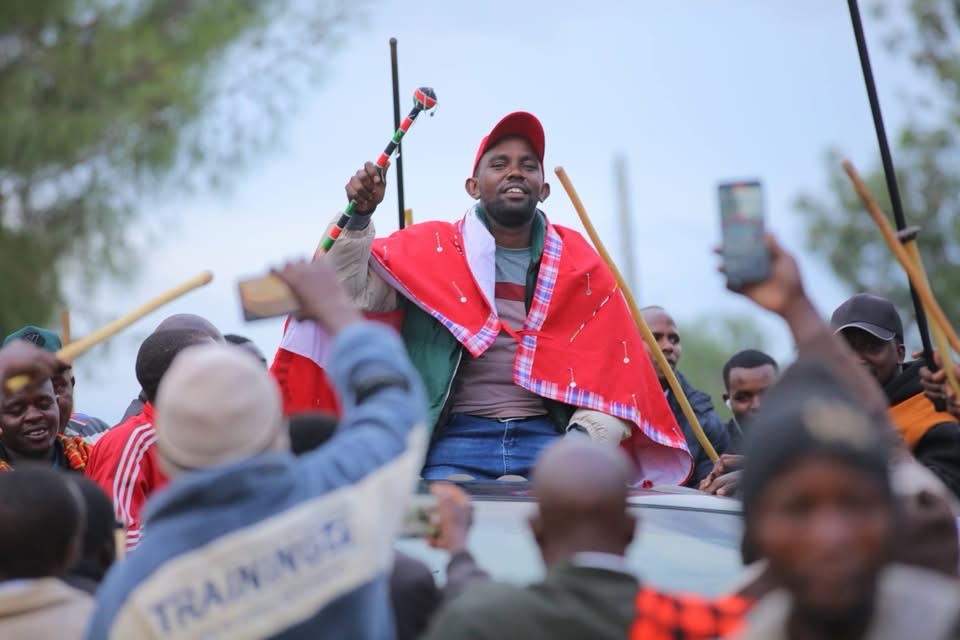
In the Book of Revelation 3:15–16, a warning is delivered to those who attempt to sit comfortably between conviction and cowardice. “I know your deeds, that you are neither cold nor hot. I wish you were either one or the other! So, because you are lukewarm—neither hot nor cold—I am about to spit you out of my mouth.” The verse was not written for theology alone. It was written for leadership.
Even Jesus himself rejected the comfort of neutrality. In the Gospel of Matthew 12:30 he declared, “Whoever is not with me is against me, and whoever does not gather with me scatters.” It was a stark warning that in moments of moral contest, silence is rarely neutral. Leaders who refuse to stand for something often discover that the public interprets their silence as absence.
Jesus reinforced this lesson in the famous Parable of the Good Samaritan. A wounded man lay on the roadside after being attacked by robbers. A priest saw him and passed by. A Levite saw him and passed by as well. Both men chose the safety of neutrality. Only the Samaritan stopped to help.
The message was unmistakable: seeing injustice and walking away is not neutrality; it is abandonment.
History repeatedly shows that neutrality, particularly in moments of community anxiety, rarely survives the judgment of time.
Consider the fate of Cambodia’s King Norodom Sihanouk in the late 1960s. Attempting to remain neutral during the Cold War, he refused to align firmly with either the United States or communist forces operating within his territory. The calculation appeared prudent at the time. Yet neutrality satisfied no one. American pressure mounted, communist insurgency grew, and eventually Sihanouk was overthrown. Cambodia descended into one of the darkest chapters of the twentieth century under the Khmer Rouge.
Neutrality, in politics, often pleases the analyst but rarely reassures the citizen.
The recent election of Martin Ole Koikai as Executive Secretary of the Kenya Union of Post Primary Education Teachers (KUPPET) in Kajiado County offers a local case study of this broader political truth. At first glance, the contest appeared to be a routine union election. But politics rarely operates on the surface. Beneath institutional contests lie deeper currents of identity, representation, and the psychology of communities.
Koikai, a teacher at Moi Isinya Girls and a resident of Kajiado West, did not merely win a union office. His victory became symbolic of something that has been quietly simmering in Kajiado: the growing concern within the Maa community about representation within institutions operating in their historical homeland.
A statistic that emerged during recent teacher recruitment exercises sharpened that anxiety. In certain recruitment cycles for Junior Secondary School and secondary school teaching positions, there were virtually no candidates from the Maa community qualifying for the opportunities available within their own county.
Statistics of that nature tend to trigger deeper reflection within any community.
When a group observes that it is present in the population but increasingly absent in professional pipelines, it begins asking uncomfortable questions. Who is qualifying? Who is being mentored? Who will lead institutions twenty years from now? Power rarely disappears overnight; it shifts gradually through systems of qualification, recruitment and representation.
Political scientist Leonardo Arriola, in his work Multiethnic Coalitions in Africa, argues that in many African democracies political mobilization frequently follows community lines not necessarily because citizens reject national identity, but because communities seek reassurance that their interests will not vanish in competitive systems.
In other words, political identity often grows strongest where communities feel their voice weakening.
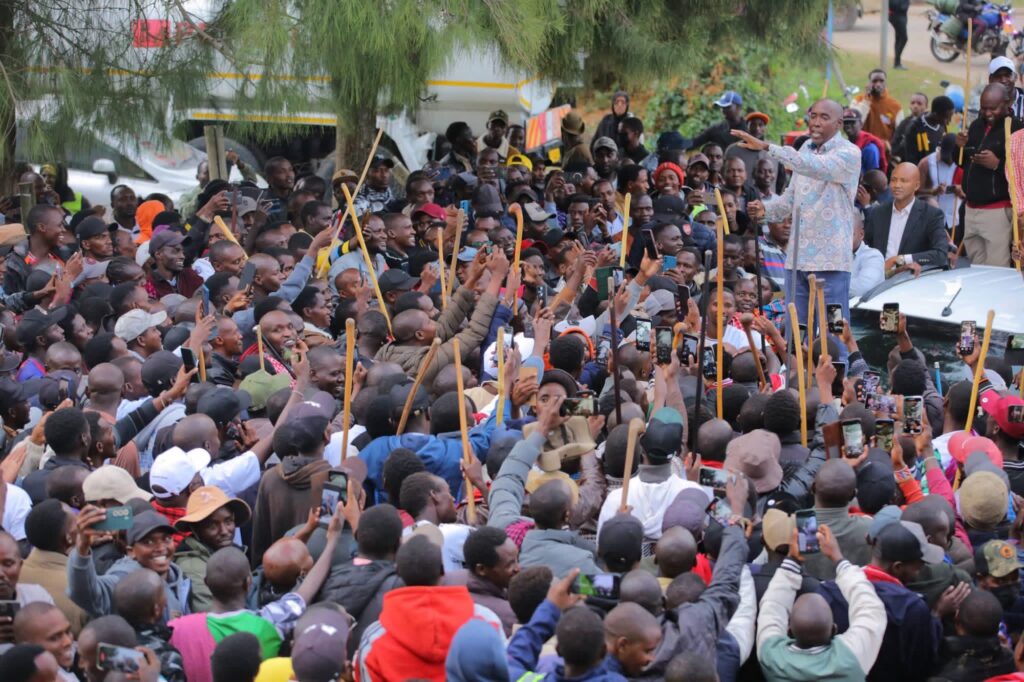
Governor Joseph Ole Lenku addresses supporters celebrating Martin Ole Koikai’s KUPPET election victory.
Governor Joseph Ole Lenku’s decision to publicly stand with the Maa community during the KUPPET contest must be interpreted within that broader political psychology. Critics rushed to describe the gesture as tribal. But political behaviour rarely fits such simplistic labels.
Let us examine a different historical parallel.
In 1933, the United States was in the depths of the Great Depression. Banks were collapsing, unemployment had reached catastrophic levels, and public confidence in institutions had almost vanished. When Franklin D. Roosevelt assumed office, many advisors urged caution. They recommended gradual reforms and careful neutrality between competing economic interests.
Roosevelt chose the opposite approach.
Within his first hundred days in office, he launched the New Deal, introducing sweeping reforms that restructured banking, created public employment programs and restored confidence in the American economy. The policies were controversial. Critics accused him of overreach. Yet Roosevelt understood a fundamental principle of leadership: when a society feels insecure about its future, caution can appear indistinguishable from indifference.
His decisiveness reassured the American public that someone was willing to act.
History later remembered Roosevelt not for avoiding controversy, but for confronting crisis with clarity.
Political analysts often misread moments like these because they focus on whether a decision is comfortable for elites. Voters, however, tend to focus on something simpler: who is willing to stand when it matters most.
The KUPPET election in Kajiado illustrates a similar dynamic. For many within the Maa community, Koikai’s candidacy was not simply about union leadership. It represented reassurance that their voice would not fade within institutions operating in their ancestral county.
Governor Lenku recognized that sentiment.
Leadership sometimes requires stepping into spaces others prefer to avoid. The American statesman Gerald Ford, while accepting the John F. Kennedy Profile in Courage Award, once observed that “the ultimate test of leadership is not the polls you take, but the risks you take.”
Lenku took that risk.
His critics argue that leaders should remain neutral in contests involving community identity. Yet neutrality in moments where communities feel marginalized often communicates something quite different on the ground. It communicates distance. Sometimes even indifference.
Political history is filled with leaders who misread such signals.
Richard Nixon, for example, possessed overwhelming political strength during the early 1970s. Yet fear and miscalculation drove him to authorize the Watergate break-in; an unnecessary act that eventually destroyed his presidency. Nixon did not lose power because he lacked authority. He lost power because he misread the psychology of political legitimacy.
Similarly, politicians often misinterpret silence as wisdom when communities interpret silence as abandonment.
The Maa community’s reaction to the KUPPET contest should therefore not surprise careful observers of Kenyan politics. Communities rarely mobilize around abstract ideology. They mobilize around dignity, representation and the perception that their voice matters.
At the same time, defending indigenous representation must never slide into exclusionary rhetoric. Kenya’s constitutional framework rests on equality, inclusivity and national unity. Kajiado itself has long demonstrated that coexistence between communities is possible. Residents from across the country have settled, invested and contributed to the county’s development.
Governor Lenku himself has governed within that inclusive framework. Kajiado today remains one of Kenya’s most diverse counties. That diversity will continue shaping its future. But diversity is strongest when it grows from a foundation of mutual respect between communities and the recognition of historical roots.
The challenge, therefore, is not choosing between diversity and indigenous identity. The challenge is balancing them in a manner that sustains social cohesion.
Political theorist Donald Horowitz, in Ethnic Groups in Conflict, argues that stability in multiethnic societies often depends on institutions that allow communities to feel represented rather than overshadowed. Ignoring identity rarely eliminates it. More often, it drives grievances underground until they emerge in sharper forms.
The lesson from the KUPPET election may therefore be less dramatic than critics assume.
Communities want reassurance.
They want to see their children qualify for opportunities within their own counties. They want to see their voices reflected in leadership structures. They want to believe that modernization will not erase their identity.
When such reassurance appears, political tension tends to decline rather than escalate.
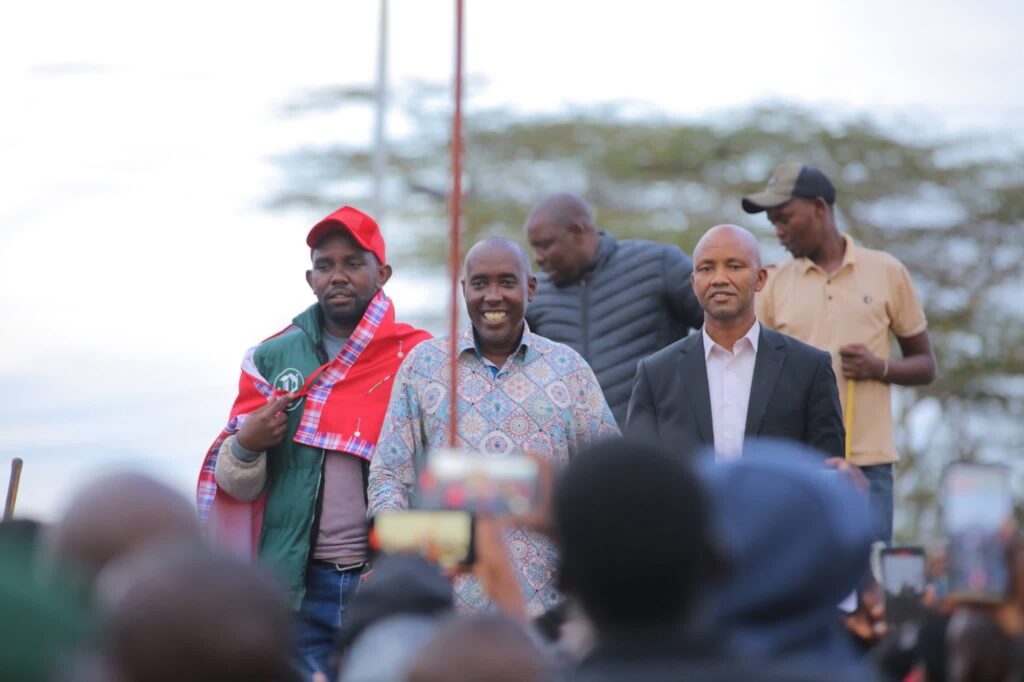
Ultimately, the debate around Lenku’s stance reveals something fundamental about leadership. Some leaders prefer the safety of silence. Others choose the discomfort of taking a position. History tends to remember the latter more clearly than the former.
As Kenya quietly inches toward the 2027 elections, the Maa counties themselves will face a deeper political question about the nature of leadership. Kajiado has already offered one answer through the political instincts of Governor Joseph Ole Lenku. In the 2022 elections, Lenku made a move many analysts initially considered risky: he chose a Maa deputy at a time when his competitors opted for non-Maa running mates in pursuit of broader coalition arithmetic. Conventional political wisdom suggested such a decision might alienate sections of a diverse county. Instead, Lenku won convincingly. The outcome revealed something important about political psychology; communities often rally behind leaders who signal dignity, security and continuity within their historical homeland. Narok today reflects a more neutral formula, with a Maa governor paired with a non-Maa deputy in an effort to balance competing constituencies. Samburu, on the other hand, has long practiced a far more explicit “son of the soil” political doctrine, where elections are framed around protecting indigenous Samburu leadership against demographic dilution from minority communities residing in the county such as Turkana, Kikuyu and others. The result has been a cohesive voting bloc anchored in cultural guardianship. Between Kajiado’s decisive politics, Narok’s balancing posture and Samburu’s indigenous consolidation lies an emerging debate within Maa politics itself. But if recent events are any indication, Kajiado under Lenku may have quietly demonstrated the model that reassures communities most: leadership that is clear about who it represents while still governing an inclusive society.
Koikai’s victory may therefore mark more than the outcome of a union election. It may signal the beginning of a broader conversation about mentorship, education and the preparation of local youth to compete for professional opportunities.
If that conversation leads to stronger schools, stronger institutions and stronger representation, then the KUPPET election will have achieved something meaningful.
Seen from this wider political lens, the KUPPET contest was never merely about a teachers’ union office. It revealed a deeper strategic instinct within Maa politics; one that Governor Joseph Ole Lenku appears to understand well. Over the years, Lenku has quietly demonstrated an ability to read the political psychology of Kajiado and design electoral alignments that others often underestimate. His interventions rarely look dramatic at the moment they occur, yet the outcomes repeatedly reveal careful calculation. The defence of Maa representation in the KUPPET contest therefore fits within a broader pattern: signaling to the community that their voice within institutions matters. As the country gradually turns its gaze toward the 2027 elections, that instinct may carry implications beyond a single county. Across Africa’s multiparty systems, regional parties and community blocs often serve as negotiation instruments in national coalitions: vehicles through which communities bargain for development resources, policy influence and institutional representation. The Maa community, spanning Kajiado, Narok and Samburu as well as related groups such as the Ilaikipiak and Ilchamus, sits on the threshold of a demographic and political moment where its collective numbers could rival those of other communities already organizing politically at the national level. In that emerging landscape, the lesson from Kajiado may prove instructive. Political capital is rarely built through silence. It is built through signals that reassure a community it has not been forgotten. And if the past few electoral cycles are anything to go by, Joseph Ole Lenku appears increasingly comfortable designing those signals long before others recognize the wave forming.
Because in politics, as history repeatedly reminds us, communities rarely mobilize simply for power.
More often, they mobilize for dignity.
For Feedback email us at: info@paran.co.ke
 NewsRoom